How can you effectively train top management to manage crises?
November 2025

Foreword
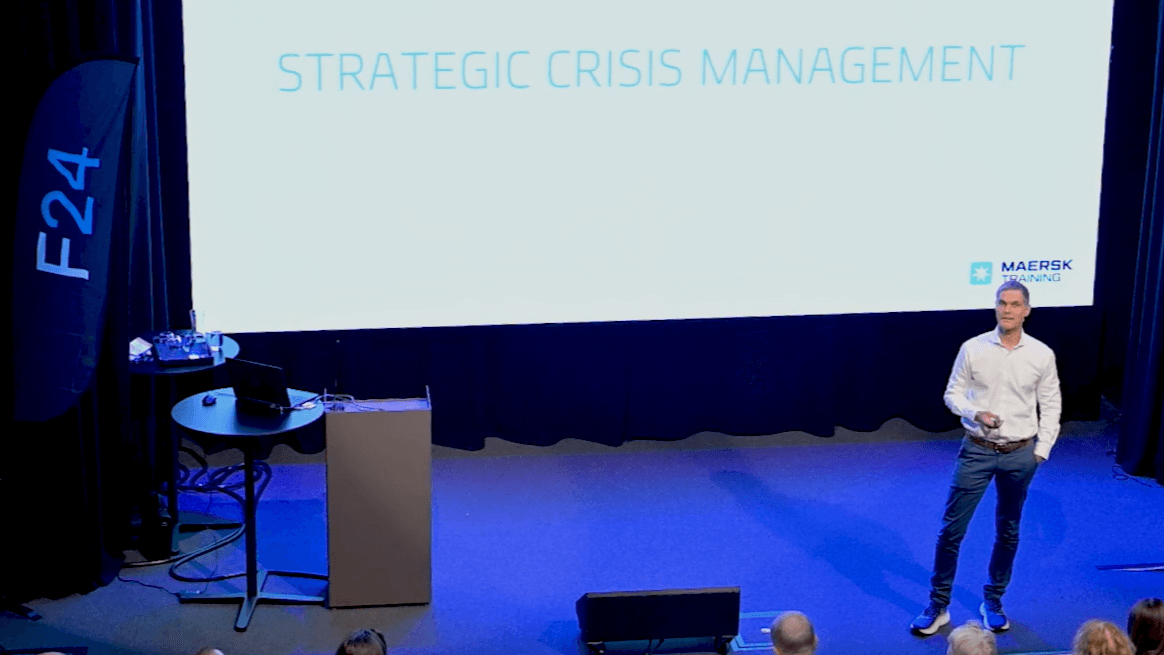
At the recent F24 Nordics Forum on Crisis Management and Business Continuity, leaders from across industries gathered to exchange lessons on how organisations can stay resilient when the unexpected strikes. I had the privilege of speaking on behalf of Maersk Training, sharing insights on how we prepare executives and top management teams to make high-stakes strategic decisions under pressure, and how our strategic crisis leadership programs are designed to help leaders respond with clarity, confidence, and care – even when the situation feels chaotic.
Training leadership across three tiers: Strategic, Tactical, Operational
In complex organisations, crises unfold across three interconnected levels:
-
Strategic: top management and executive crisis teams are responsible for not handling the crisis itself but handling the stategic consequences of the crisis. Focusing on e.g. legal, finance, business continuity, reputation and stakeholders.
-
Tactical: coordination teams managing priorities, communication flow, and interdepartmental alignment.
-
Operational: on-site teams responding directly to incidents, safeguarding lives, assets, and the environment.
Training must reflect this structure – simulating not just events, but the interactions between levels. We use high-fidelity crisis scenarios to replicate these pressures, allowing leaders to practise collaboration, decision-making, and communication under real conditions.
Stakeholder Management – knowing who matters, when
In oil and gas operations, the list of stakeholders is long – from NGOs and environmental organisations to regulators, partners, and the public. Some are visible and vocal; others act quietly but carry influence. Stakeholders use media actively or passively, and managing these relationships requires a long-term, structured approach.
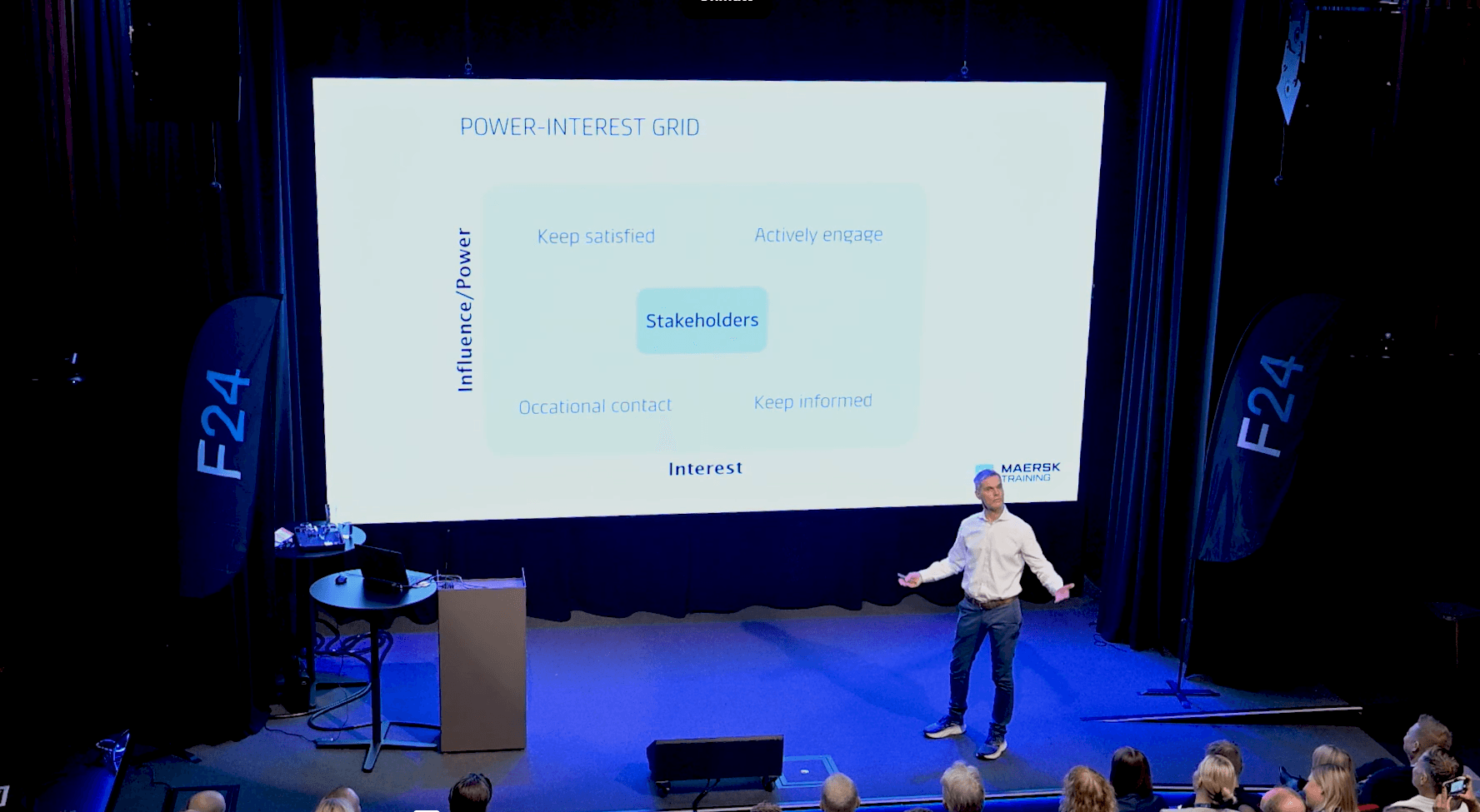
Professional stakeholder management is about understanding who to talk to, when, and how. Not all stakeholders need the same attention all the time; their relevance shifts depending on the issue’s interest and influence. That’s why we train top management teams to use tools like the Power–Interest Grid, mapping stakeholders dynamically as a crisis unfolds.
The goal is not just to “manage” stakeholders but to engage in dialogue, even when it’s difficult. Experience shows that early, honest communication often protects reputation far better than silence or denial.
Decision-Making – leading under pressure
A true crisis is defined by a lack of complete information. Leaders often ask: “Should we wait for the full picture before speaking?” The answer is no. In crisis management, the “golden hour” (the first 60 minutes) is crucial. Verification, not perfection, is what matters.
During that first hour, leadership must verify facts, initiate internal coordination, and begin communication – even if all details aren’t yet clear. Waiting for total certainty leads to paralysis, and inaction becomes its own liability.
Decision-making training therefore focuses on:
-
Recognising when to shift from management to command mode.
-
Prioritising what truly matters: people, environment, assets, and reputation.
-
Avoiding consensus paralysis – decisive leadership beats delayed agreement.
-
Aligning with communication advisors to establish clear, factual key messages.
The Proactive Method – structured clarity in chaos
No amount of planning can eliminate crisis uncertainty. But training and knowledge reduce stress, helping leaders remain calm and decisive.
The Proactive Method, used extensively in our programs and adopted from high-reliability sectors like oil & gas, the military, and emergency response, is built on four principles:
-
Identify risks and assess potential consequences.
-
Be proactive without losing time.
-
Work systematically toward normalisation.
-
Reduce negative impacts through timely decisions.
At its core, the method teaches leaders to act on available information — not to wait for perfect data. This requires courage, prioritisation, and discipline: acting first to protect lives, the environment, equipment, and reputation.
Reputation Management – the fragile currency of trust
Reputation is built stone by stone over many years — and can collapse in a single day. As Warren Buffett famously said: “If you lose dollars for the firm, I will be understanding. If you lose reputation for the firm, I will be ruthless.”
When an incident occurs, reputation is not only at stake but often the true casualty of poor crisis handling. While financial losses can be recovered, reputational damage lingers.
Training leaders to protect reputation involves more than issuing statements. It’s about shaping perception through action and empathy. Effective crisis communication shows not only what you know, but how much you care — echoing Theodore Roosevelt’s timeless reminder:
“Nobody cares how much you know, until they know how much you care.”
Media & Communication – from silence to sincerity
Media operates at the speed of seconds, not days. Silence is no longer golden; it’s damaging.
A sound communication strategy answers four essential questions:
-
Objective – why are we communicating?
-
Target groups – who needs to know?
-
Messages – what must we say?
-
Channels – where should we say it?
Avoid speculation; communicate the facts you know and how you’re working to establish the rest. Express empathy for affected people first — before profitability or operations. Demonstrate care through actions, not slogans, and ensure access to leadership voices who can speak with authority and sincerity.

From training to transformation
Strategic crisis leadership is a muscle that must be trained. Through repeated exposure to simulated pressure, decision fatigue, and public scrutiny, leaders become calmer, clearer, and more capable when it matters most.
At Maersk Training, we’ve seen this transformation first-hand. Preparedness is not about predicting every scenario. It’s about preparing people to respond with integrity, intelligence, and empathy when the unthinkable happens.